What Are the Best 3D Systems Printers in 2026?
Choosing among 3d systems printers in 2026 means looking beyond print speed or resolution. The right machine depends on what you make, how often you print, and what your workflow can support. A dental lab, product-design studio, and factory may need very different things.
This guide compares printer categories and models against practical criteria: build volume, material options, accuracy, repeatability, operating costs, and service needs. It also considers the full workflow, from preparing a digital file to removing and finishing a part. A glossy sample on a desk can look impressive. The harder question is whether the printer can produce dependable results on an ordinary workday.
That matters.
Specifications are useful, but they do not tell the whole story. Materials, maintenance, software, and operator experience can all affect results. We’ll distinguish published capabilities from factors buyers should confirm with current product documentation or a supplier. Availability and model configurations may also change during 2026, so verify details before making a purchase.
There is no universal winner. A compact system may suit a small design team, while a larger production setup could make more sense for repeated jobs. Even then, the cheapest option may not stay cheapest. This overview offers a grounded starting point, highlights trade-offs, and leaves room for the less convenient truth: the best printer is often the one your team can run consistently.
How 3D Systems Printers Are Classified by Technology
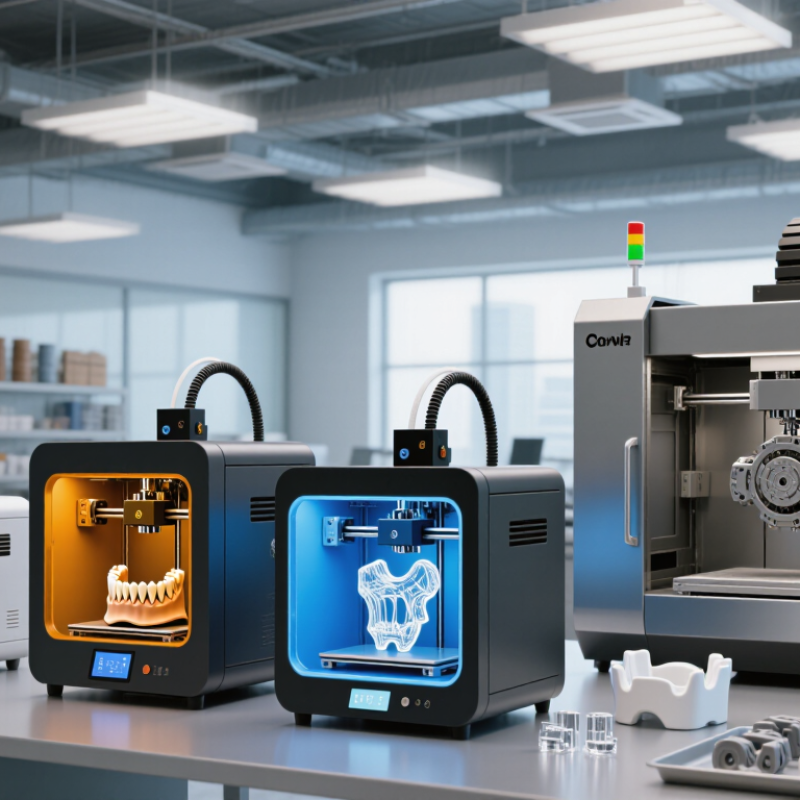
In 2026, the best printer depends less on a headline speed and more on the part’s job. Technology is a useful starting point. Stereolithography cures liquid resin with light, producing smooth surfaces and fine details for visual models or precise prototypes. Selective laser sintering fuses polymer powder, making durable parts with complex shapes and no separate support structures. Its surfaces can feel grainy.
Material jetting deposits tiny droplets of material and support wax. It suits detailed, multi-material models, though support removal takes care. Color powder-bed printing uses a binding agent to create full-color models, often for presentation rather than heavy loads. Direct metal printing fuses metal powder with a laser; it can create functional components, but requires controlled processing and careful finishing. The trade-off is real.
Choosing among these technologies means checking the actual part, not just a brochure. Compare sample parts for surface texture, dimensional accuracy, strength, and the cleanup they require. Ask whether quoted accuracy applies across the whole build volume. It may not.
Also consider material availability, operator training, and post-processing equipment, since these affect everyday production. Fit matters more. A small test build can reveal inconvenient details, such as trapped powder, resin handling needs, or support marks, before they become routine costs.
Key Criteria for Comparing 3D Systems Printers
A useful comparison starts with the part, not the machine. List the materials, dimensions, tolerances, and surface finish your work actually requires. A large build volume can look impressive, but unused space may add cost without improving results. Check whether the printer supports the specific material you need, including any required handling or curing steps.
Accuracy matters, but repeatability matters just as much. Ask whether multiple prints hold their dimensions across the build area, not only near the center. A small test coupon can reveal edge warping, fine-detail limits, and surface texture before a full production run. Speed claims also need context: printing time may exclude setup, support removal, cleaning, or curing. Those steps count. A single benchmark is rarely decisive, and even a careful test may miss problems that appear during longer runs.
Compare total ownership costs, including materials, maintenance, training, software, and expected downtime. Consider how easily operators can prepare files and diagnose failed jobs. A printer with excellent output may still be a poor fit if its workflow is difficult to maintain. No scorecard is perfect. Weight each criterion by the cost of getting it wrong, then verify important claims with sample parts and clear acceptance measurements.
What Are the Best 3D Systems Printers in 2026? — Key Criteria for Comparing 3D Systems Printers
There is no single best 3D printer for every job. This brand-neutral comparison summarizes common industrial printer technologies and typical capability ranges to help match a process to an application.
| Printer Technology | Typical Build Volume | Common Materials | Typical Layer Thickness | Key Advantages | Main Trade-offs | Best Fit |
|---|---|---|---|---|---|---|
| Stereolithography (SLA) | About 150 × 150 × 150 mm to 800 × 800 × 500 mm; larger systems are available. | Photopolymer resins, including general-purpose, engineering, and castable formulations. | About 25–100 μm | Fine detail, smooth surfaces, and good suitability for appearance models, patterns, and detailed prototypes. | Parts require washing and post-curing; resin properties vary, and many resins are less suitable than thermoplastics for long-term heat or impact exposure. | Detailed prototypes, presentation models, and casting patterns. |
| Selective Laser Sintering (SLS) | About 300 × 300 × 300 mm to 700 × 380 × 550 mm, depending on the system. | Primarily nylon powders, including filled and specialty grades. | About 60–150 μm | Produces functional thermoplastic parts without dedicated support structures; nesting can make efficient use of the build chamber. | Powder handling and cleaning are required; surfaces are typically textured, and unused powder management adds process steps. | Durable prototypes, complex housings, ducts, and small-batch polymer parts. |
| Direct Metal Laser Sintering (DMLS) / Laser Powder Bed Fusion | Commonly about 100 × 100 × 100 mm to 500 × 500 × 500 mm. | Metal powders such as stainless steel, aluminum, titanium, and cobalt-chrome alloys. | About 20–80 μm | Can produce dense, complex metal components and internal features that are difficult to machine conventionally. | Requires specialized powder safety, support removal, and often heat treatment or machining; equipment and operating costs are high. | Metal parts with complex geometry, lightweighting, or consolidated assemblies. |
| Material Jetting | Often about 200 × 200 × 150 mm to 500 × 400 × 200 mm. | Photopolymer materials, sometimes deposited in multiple colors or material combinations. | About 16–32 μm | High detail and smooth surfaces; some systems can create color or multi-material models in one build. | Support material must be removed; photopolymer parts may have limited long-term mechanical or environmental durability. | Visual prototypes, fit-and-form models, and multi-color concept models. |
| Fused Filament Fabrication (FFF/FDM) | Commonly about 200 × 200 × 200 mm to 1,000 × 1,000 × 1,000 mm or more. | Thermoplastic filaments such as PLA, ABS, PETG, nylon, and fiber-reinforced grades. | About 50–300 μm | Broad material availability, relatively straightforward operation, and practical options for large fixtures and prototypes. | Visible layer lines are common; orientation affects strength, and support structures may be needed for overhangs. | Jigs, fixtures, large prototypes, and economical functional parts. |
Ranges are indicative of industrial systems, not specifications for a particular printer. Actual build volume, layer settings, accuracy, materials, and post-processing requirements vary by machine and application. Layer thickness is not the same as dimensional accuracy.
Leading 3D Systems Printers for Different Applications in 2026
In 2026, the best 3D printer depends on the part you need, not a headline specification. Resin systems suit small components with crisp lettering, smooth curves, and fine surface detail. They can work well for dental models and product prototypes, but washing and curing add steps. Powder-based systems are useful for durable polymer parts with complex shapes and minimal support structures. Material-extrusion printers can make larger fixtures and early prototypes at a more accessible cost, though visible layer lines may need cleanup.
Tips: Match the build area to your actual parts, not occasional oversized jobs. Ask for repeatability data and a sample made with your intended material. Check ventilation, post-processing needs, software workflow, and local service access before comparing purchase prices. A polished demonstration part can hide practical limitations.
For metal components, powder-bed fusion can produce intricate geometries, but it demands careful process control and qualified inspection. Consider whether the application needs heat resistance, tight tolerances, or certified material properties. Those requirements can change the best choice. Even a well-planned evaluation may miss a bottleneck, such as slow support removal or limited operator training. Run a small pilot with representative parts and record actual cycle time, finishing effort, and failure rates.
Materials and Industries Supported by 3D Systems Printers
Industrial 3D printers can process several material families, but the available choices depend on the machine and its printing method. Common options include thermoplastics for durable parts, light-cured resins for fine surface detail, and metal powders for strong components. Some systems also handle ceramic materials. Each behaves differently: a resin part may capture tiny grooves, while a metal part can better tolerate heat and load. Material names alone are not enough. Check strength, flexibility, temperature limits, and post-processing needs before choosing.
These capabilities serve healthcare, dentistry, aerospace, automotive, and industrial tooling. Dental labs may value accurate shapes and smooth finishes. Aerospace teams often assess weight, strength, and traceability. Automotive engineers can print fixtures or prototypes for fit checks. A material that works well for a visual model may not suit a working component. That distinction is easy to overlook.
Tips: Match the material to the part’s real job, not just its appearance. Ask for data on strength, heat resistance, and repeatability. Review sample parts, too. Small details matter. A test print can reveal warping, rough edges, or support marks before a larger production run. Even then, results may vary with design and settings.
Representative 3D-Printing Materials and Industries
Approximate melting temperatures of selected thermoplastics used in additive manufacturing.
PLA is common in prototypes and consumer products; polypropylene is used for lightweight, chemical-resistant parts; PA12 is used for functional components in automotive and healthcare applications; and PEEK is used for demanding aerospace, medical, and industrial parts. Melting temperatures vary by grade, and printer compatibility depends on the specific machine and process.
How to Choose a 3D Systems Printer for Your Needs
Choosing a printer starts with the part, not the machine. List the materials, tolerances, surface finish, and monthly output your work actually requires. The Wohlers Report 2024 valued the global additive manufacturing industry at $20.0 billion, up 11.1% from 2023. That growth signals more options, not a universal best choice.
Match the process to the job.
Resin systems can capture fine lettering and smooth curves, but parts may need washing and curing.
Powder-based systems can produce complex geometries without support structures, though powder handling and finishing add work.
Filament systems suit straightforward prototypes and larger fixtures; check layer visibility and material limits before committing.
Fit matters. Compare the usable build area with your largest real part, including supports and clearance.
Ask suppliers for sample parts made in your intended material, then inspect small holes, thin walls, and mating surfaces. Request measured accuracy data, maintenance intervals, material costs, and service response times—not just maximum resolution.
A printer that runs unattended sounds ideal, but actual labor can hide in setup and finishing. I would question any specification that lacks test conditions. One more check: estimate total cost per acceptable part, including failed builds, rather than comparing purchase prices alone.
Related Posts
-
What Are the Top 3D Printer Manufacturers in China?
-
China Top 3D Printers Suppliers for Global Buyers?
-
Exploring the Industry Standards for the Best 3D Printer and Their Impact on Your Business
-
Ultimate Guide to Top 3D Machine Printers: A Comprehensive Comparison for Global Buyers
-
Unlocking the Secrets to the Best 3D Systems Printers for Your Business Needs
-
Exploring the Revolution of 3D Machine Printers for Custom Manufacturing Solutions