What Are the Top 3D Printer Manufacturers in China?
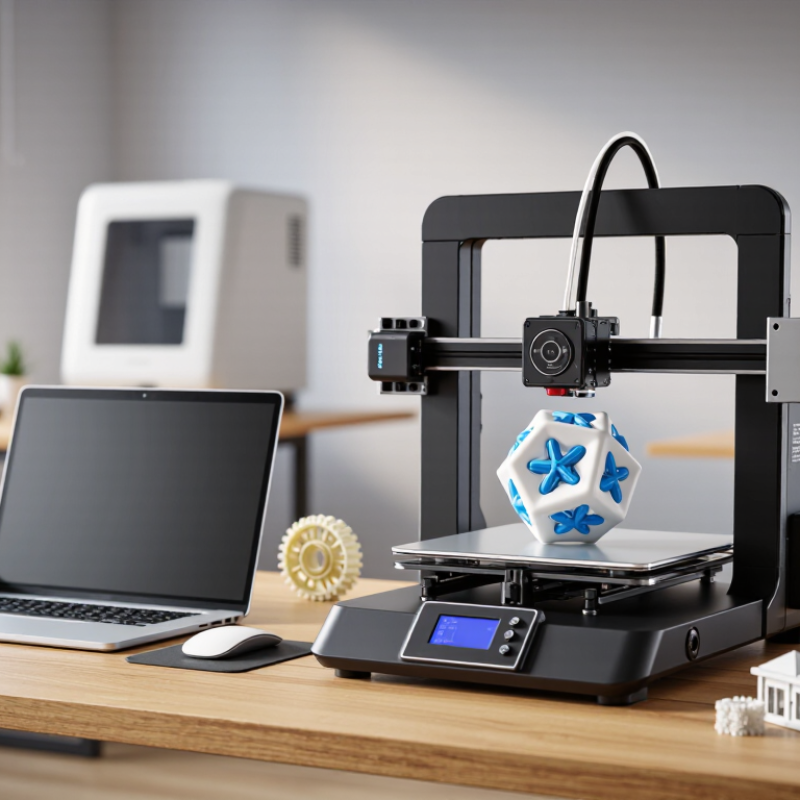
China has become an important source of desktop and industrial 3d printers, with manufacturers serving hobbyists, schools, design studios, and production teams. Names such as Creality, Bambu Lab, Anycubic, Flashforge, and ELEGOO often appear in discussions of the market. Their products differ in build volume, printing speed, material support, software, and after-sales service. A compact printer beside a laptop tells only part of the story.
The word “top” needs context. A low-cost machine may suit a first-time user, while a workshop may need reliable output, accessible spare parts, and consistent print quality. A fast specification can look impressive. Real prints matter more. This guide compares manufacturers through practical criteria, including product range, user support, innovation, and value. It also considers how each company serves different budgets and experience levels, rather than treating one model as the best choice for everyone. Company claims and specifications can change, so buyers should check current product details and independent reviews before making a decision. No shortlist is perfectly neutral; that deserves saying. The goal here is a useful starting point, not a final verdict. Readers can use the comparison to identify manufacturers worth researching and questions to ask before choosing a printer.
How China’s 3D Printer Manufacturing Industry Is Structured
How China’s 3D Printer Manufacturing Industry Is Structured
China’s 3D printer industry is better understood as a supply chain than a list of machine makers. It includes component suppliers, equipment manufacturers, material producers, software developers, and service providers. Wohlers Report 2024 estimated the global additive manufacturing market at $20.0 billion in 2023, covering products and services—not printer sales alone. This broader measure shows why manufacturers depend on more than assembly lines.
At the hardware level, companies source motion systems, control electronics, laser or extrusion components, and frames, then integrate and test them. Materials suppliers provide filaments, powders, and resins; software teams build tools for preparing and monitoring jobs. Service bureaus connect these layers to users who need prototypes or production parts. Not a simple ladder. Companies may span several roles, while smaller suppliers focus on one component. That overlap can make comparisons difficult, and published market figures do not always use the same definitions.
Tips: When assessing a manufacturer, ask who makes the critical components, how machines are tested, and whether material and software support is available locally. Look for clear specifications and repeatable sample results. A polished demo is useful, but it is not the whole picture.
What Criteria Define a Leading 3D Printer Manufacturer?
A leading 3D printer manufacturer is defined by repeatable performance, not a glossy speed claim.
Ask how the machine behaves after hundreds of hours, not just during a short demonstration. A useful evaluation includes dimensional accuracy, layer consistency, material compatibility, and recovery after a failed print. Request sample parts with measured dimensions and visible surface details. Numbers can mislead.
Manufacturing discipline matters just as much.
Look for documented inspection steps, traceable components, and calibration checks before shipment. A well-built printer should hold steady during long jobs, with secure wiring, accessible maintenance points, and clear operating instructions. Ask how the manufacturer tests units across different batches. One impressive sample proves little. Transparent test records offer stronger evidence.
Technical support is another defining criterion.
Can engineers explain a print defect using a photo, settings, and material details? Are spare parts available, and are troubleshooting guides specific enough to follow? A serious supplier should answer plainly, including where its machines have limits. I would not judge quality from a factory tour alone; polished rooms can hide uneven production. Compare independent feedback, request a trial run, and verify claims against your own workload.
Which Three Manufacturers Stand Out in China?
China’s three standout 3D printer manufacturers are best compared by what they build, not by a single sales ranking. The first group focuses on accessible polymer printers for schools, studios, and small production teams. Look for reliable calibration, consistent extrusion, and easy-to-source parts. The second builds industrial metal systems for aerospace, medical, and tooling applications, where powder handling, process monitoring, and repeatable builds matter most. The third specializes in large-format or production-line systems, often pairing printers with material handling and post-processing. These are useful distinctions, not a definitive ranking.
The figures show why the market deserves close attention. The China Additive Manufacturing Industry Alliance estimated China’s 3D-printing industry output at about RMB 45.6 billion in 2023. Wohlers Report 2024 put global additive-manufacturing revenue at US$20.0 billion that year, up 11.1% from 2022. Growth alone proves little. Buyers should request sample parts, inspect layer consistency, and check whether quoted throughput includes finishing time. A smooth demo is not enough. This comparison has limits: public reports measure markets differently, and factory performance can vary between models. A printer that looks strong on paper may still need frequent tuning.
What Are the Top 3D Printer Manufacturers in China? — Three Standout Profiles
| Profile |
Base and Founded |
Core Technologies |
Main Focus |
Why It Stands Out |
| Consumer FDM/FFF specialist |
Shenzhen, Guangdong; established in 2014 |
Filament-based FDM/FFF; also offers resin-based printing systems |
Home users, educators, makers, and small businesses |
A broad consumer-oriented portfolio spanning entry-level and more advanced desktop printing needs. |
| High-speed desktop printing specialist |
Shenzhen, Guangdong; established in 2020 |
High-speed CoreXY FDM/FFF; automated multicolor and multi-material workflows are available on selected systems |
Desktop prototyping, engineering projects, and creative production |
Combines fast desktop printing with integrated hardware, software, and material-management features. |
| Industrial powder-bed fusion specialist |
Changsha, Hunan; established in 2009 |
Industrial polymer and metal powder-bed fusion |
Production, functional prototypes, and industrial applications |
Focuses on industrial-scale additive manufacturing systems for both polymer and metal parts. |
Note: These are representative manufacturer profiles, not a ranked list. Company names and brand names are intentionally omitted.
How Their Technologies and Product Lines Differ
China-based printer manufacturers differ less by location than by engineering priorities. Some focus on compact filament machines for schools, studios, and home workshops. Others build enclosed systems with heated chambers, rigid frames, and sensors for longer production runs. Differences show up in practical details: flexible build plates, nozzle temperature ranges, calibration steps, and access to spare parts. Small things matter.
Product lines often divide by material and workflow. Filament models suit larger, sturdy parts, while resin systems capture fine surface detail on smaller objects. Industrial ranges may add multi-material handling, automatic bed checks, or remote job monitoring. These features can reduce operator effort, but they cannot guarantee consistent results. A reliable first layer still depends on dry material, room conditions, and careful setup. Fit matters more.
Specifications alone can mislead. A fast motion system may leave rough corners if cooling or frame rigidity falls short. Ask for sample parts made with your intended material, then inspect seams, holes, and repeatability across several prints. Check whether the software supports common file formats and whether maintenance instructions explain routine tasks clearly. Product pages rarely show the awkward part: how often a nozzle clogs or a sensor needs adjustment. That gap deserves attention.
What Are the Top 3D Printer Manufacturers in China? How Their Technologies and Product Lines Differ
This chart shows typical nozzle-temperature ranges for common materials used in FFF/FDM printers, one of the major technologies found across desktop and professional 3D printer product lines. Values are indicative; recommended settings vary by filament formulation and printer.
Material compatibility is one practical way to compare extrusion-based product lines: entry-level systems often focus on lower-temperature materials, while higher-temperature materials generally require printers designed for elevated nozzle temperatures and suitable hot-end components. This is a technology overview, not a company ranking.
Which Manufacturer Best Fits Each Printing Need?
Choosing a Chinese 3D printer manufacturer starts with the parts you need to make, not a ranking. For product prototypes, look for teams offering accurate motion systems, stable temperature control, and accessible technical support. A sharply printed test piece is useful, but repeatable results across several builds matter more.
Details matter.
For small production runs, prioritize machines with dependable uptime, easy-to-source replacement parts, and documented maintenance procedures. Ask for sample parts made with your intended material and inspect thin walls, holes, and surface finish. Manufacturers focused on larger-format printing may suit furniture components or display models, where build volume matters more than tiny features. Their machines can take up substantial floor space, though.
Schools and design studios may benefit from simpler workflows, enclosed machines, and responsive training. Industrial users should examine calibration records, material compatibility, and service coverage before committing. Request a live demonstration using a practical test file, then compare the result with the manufacturer’s stated tolerances. Not always. A polished demo does not prove long-term reliability, and I would want evidence from repeated jobs before choosing.