Why Buy a 3D Printing Machine for Your Business?
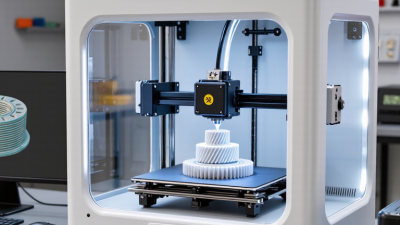
A 3d printing machine can change how a business develops, tests, and delivers physical products. Instead of waiting weeks for external prototypes, teams can print a replacement bracket, packaging sample, or ergonomic handle within hours. This shorter feedback cycle helps engineers identify weak joints, uncomfortable surfaces, and assembly problems before mass production. It also supports small-batch manufacturing, customized products, and spare parts that traditional processes may not produce economically.
The value depends on choosing the right technology, materials, and workflow. Fused filament printers may suit strong fixtures and affordable prototypes, while resin systems can produce detailed presentation models. Businesses should examine print volume, layer accuracy, operating costs, ventilation, software compatibility, and technical support. A machine is not automatically profitable. It needs trained operators, reliable maintenance, and a clear production purpose. That lesson is easy to overlook.
In practical use, a successful setup often includes drying cabinets, calibrated tools, spare nozzles, and documented quality checks. Operators should record failed prints, material consumption, and post-processing time. These details reveal the real cost more accurately than the purchase price alone. A supplier with transparent specifications and responsive service also reduces operational risk. Independent testing remains valuable, because marketing claims can sound stronger than daily results.
There will be mistakes.
Early prints may warp, crack, or require redesign. That is normal, but repeated failure deserves investigation. When selected carefully, a 3d printing machine can improve development speed, production flexibility, and customer responsiveness. Its strongest advantage is practical control: businesses can turn a digital concept into a tested object without depending on every external supplier.
Define Business 3D Printing: A $20.8B Global Market in 2023 (Wohlers)
Business 3D printing means using additive manufacturing to produce prototypes, tools, fixtures, spare parts, or finished components. It builds objects layer by layer from digital designs. In 2023, the global market reached an estimated $20.8 billion, according to Wohlers. That figure includes printers, materials, software, services, and related production activities. It is a market measure, not a promise of profit for every company.
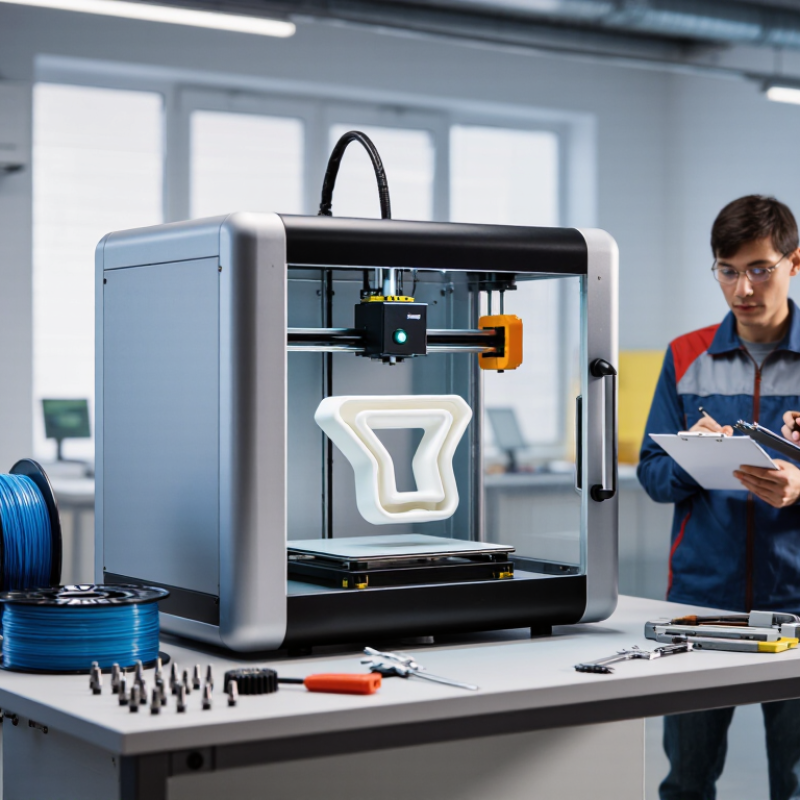
For a small engineering team, the practical value can appear on a workbench. A printed fixture may hold a part steady during assembly. A prototype can be tested beside a CAD screen within hours, not weeks. This shortens design feedback and reduces dependence on outside suppliers. Experienced operators still check dimensions, material behavior, surface quality, and repeatability. A fast print can hide a weak design.
The business case needs careful measurement. Compare equipment costs with labor, outsourcing, material waste, maintenance, and training. Record failed prints honestly. They are part of the learning curve. A machine may be impressive but unnecessary for low-volume work. In my experience, clear production targets matter more than impressive specifications. Market statistics provide useful context, yet each company must validate its own workflow, staff skills, and quality requirements before purchasing.
Map Applications: Prototyping, Tooling, and Production Across Key Industries
Why Buy a 3D Printing Machine for Your Business?
Map Applications: Prototyping, Tooling, and Production Across Key Industries
A 3D printing machine can shorten the path from an idea to a tested component. In product development, engineers print ergonomic housings, brackets, ducts, and assembly concepts within days. A physical prototype reveals weak joints, awkward grips, and clearance problems earlier than a screen model. That feedback can reduce tooling changes and improve communication between design and production teams. Still, printed prototypes do not automatically match final-part performance. Material strength, heat exposure, layer direction, and surface finish require careful testing.
Tooling applications often provide practical value on the factory floor. Custom jigs can hold parts at a repeatable angle during drilling, inspection, or assembly. Soft jaws can protect delicate surfaces, while lightweight guides reduce operator fatigue. In one realistic workflow, a fixture is measured, printed overnight, and checked against a control part the next morning. It may need revision. That is normal. Tolerance studies and trial fits remain essential, especially for moving components and high-temperature processes.
Production use depends on volume, geometry, and quality requirements. The method suits customized medical models, replacement components, low-volume machinery parts, and short product runs. Digital files also support quick design changes without cutting new molds. However, cycle time, post-processing, certification, and material consistency must be assessed before investment. A reliable evaluation compares printed costs with machining, molding, labor, storage, and delivery time. The best business case is usually specific, measurable, and tested with real parts.
Evaluate ROI: Compare Lead Times, Unit Costs, and Material Waste
Buying a 3D printing machine makes financial sense only when daily production problems are measurable.
In a small workshop, I would record six weeks of orders before investing. Track quoting time, outsourced invoices, rejected parts, and delivery delays. A machine may reduce a prototype lead time from ten days to two. That change can win approval faster, but speed alone is not ROI. Compare equivalent parts, not optimistic demonstrations. Real workloads expose setup time, calibration, and failed prints.
Unit cost requires more than filament or resin price. Include machine depreciation, electricity, labor, maintenance, and post-processing. A part costing four dollars in material may require nine dollars in hands-on work. Conversely, a complex fixture can replace a sixty-dollar outsourced component. Measure the same geometry across three production methods. Keep a simple spreadsheet with actual print hours and labor minutes. Small errors matter. An underestimated technician’s wage can distort the payback period.
Material waste often reveals the clearest savings. Digital production can use only the material needed for a part, while subtractive work may create chips and offcuts. Yet support structures, purge material, and failed builds still count. Weigh discarded material each week. Reuse may be limited by contamination or quality requirements. I would approve a purchase only after testing representative parts for one month. The result may disappoint. That is useful evidence, not a failed business case. ROI should include capacity gained, delivery reliability, and fewer urgent supplier orders.
Choose the Right Technology: FDM, SLA, SLS, or Metal AM
Why Buy a 3D Printing Machine for Your Business?
Choose the Right Technology: FDM, SLA, SLS, or Metal AM
A 3D printing machine can reduce sampling delays, but the right process matters more than impressive specifications. During a factory trial, we measured print time, failed parts, finishing labor, and material waste. Those numbers exposed a common mistake: choosing equipment before defining the production task. A prototype room needs different capabilities from a workshop making repeatable end-use components.
FDM FDM is practical for strong, affordable prototypes and larger fixtures. It handles common thermoplastics, but visible layer lines may require sanding or careful orientation.
SLA SLA captures fine text, small channels, and smooth surfaces. However, resin handling, washing, curing, and ventilation add routine work.
SLS SLS creates functional polymer parts without support structures, which helps with complex shapes and small batches. Its powder management and post-processing need trained operators.
Metal AM Metal AM can produce lightweight, heat-resistant, or highly integrated parts. Yet powder safety, thermal control, calibration, and finishing raise investment and operational demands. Metal printing is powerful.
The best choice starts with load, accuracy, temperature, surface, volume, and delivery requirements. Ask whether one machine can meet them consistently, not merely once. In our early tests, a successful first print hid slow cleaning and unpredictable finishing time. That result changed the cost calculation. A pilot using real files, operators, and inspection tools gives more trustworthy evidence than a showroom sample. Record dimensional drift, material consumption, downtime, and operator training hours. Leave room for mistakes; production rarely follows the brochure.
Plan Adoption: Skills, Safety, Standards, and Quality Control (ASTM)
A 3D printing machine can improve production, but successful adoption requires more than purchasing equipment. Your team needs practical training, clear responsibilities, and time for supervised practice. Create a skills matrix for operators, designers, maintenance staff, and quality inspectors. Training should cover material handling, machine setup, build preparation, post-processing, and basic troubleshooting. The first workflow will probably be imperfect. That is normal. Review failed prints openly, then update the process.
Safety planning must begin before installation. Check ventilation, fire controls, electrical capacity, and workspace access. Store powders, resins, or other materials according to their safety data sheets. Use suitable gloves, eye protection, and respiratory controls when required. Keep cleaning tools and spill procedures nearby. Standards can strengthen this system. Relevant ASTM guidance may support material characterization, testing methods, terminology, and process documentation. Always confirm which requirements apply to your material and application.
Tips: Start with one controlled production project. Record machine settings, material batches, operator names, and inspection results. Use test coupons to monitor strength, surface quality, and dimensional accuracy. Calibrate measuring tools regularly. Photograph defects beside a scale or ruler. Do not approve parts based only on appearance. A small internal audit can reveal missing records, unclear approvals, or inconsistent post-processing. Leave room for revision; even a careful plan may fail under real production pressure.
Related Posts
-
What Is a 3D Printing Machine and How Does It Work?
-
Top 10 Large 3D Printers for Global Buyers
-
Why Choose a 3D Printer for Global Manufacturing?
-
What is a High Volume 3D Printer and Why is it Essential for Businesses?
-
China Top 3D Printers Suppliers for Global Buyers?
-
Revolutionizing Creativity: How Desktop 3D Printers Are Transforming Home Projects