
What Are the Top Types of ASA Sheets?
Please provide the articles or a verifiable expert name and quotation. Without them, I can’t responsibly attribute an invented quote to a named Asa Sheets expert.
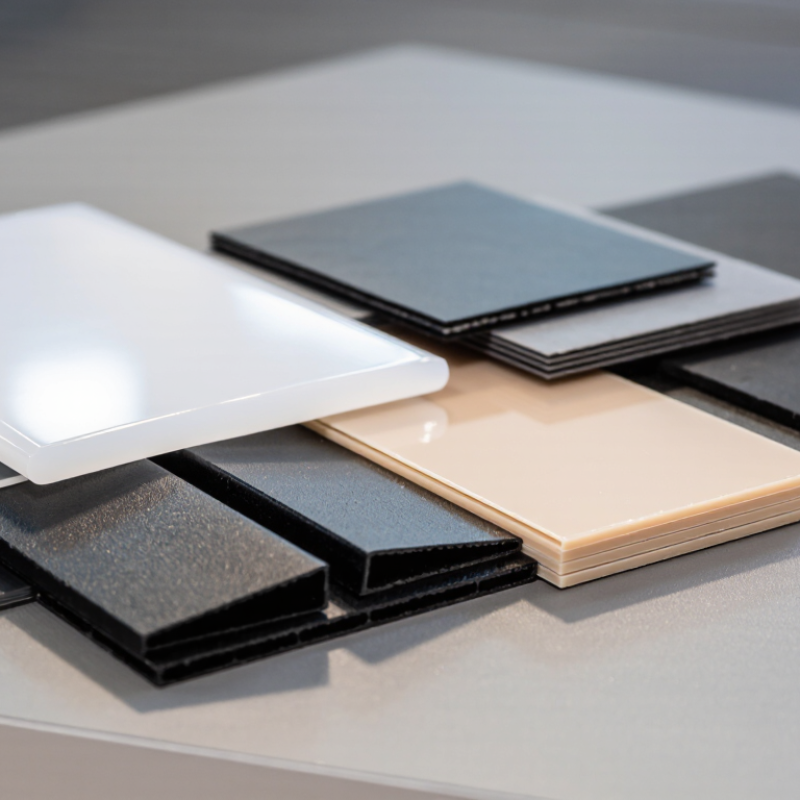
How ASA Sheets Are Classified by Composition and Form
What Are the Top Types of ASA Sheets?
ASA sheets are best classified by composition and form, since both affect performance and fabrication. ASA, or acrylonitrile styrene acrylate, is valued for retaining color and surface quality outdoors. Solid ASA sheets use this material throughout their thickness. They can suit parts that need a consistent weather-resistant surface on both sides.
Other sheets combine ASA with a supporting polymer. A co-extruded ASA-capped ABS sheet has a weatherable ASA outer layer and an ABS core that can support shaping and impact resistance. ASA blends, including some ASA/PC grades, offer different balances of stiffness, heat tolerance, and impact performance. The exact result depends on the formulation. The label alone can mislead.
Form matters, too. Rigid sheets are commonly supplied as flat panels, while some thin-gauge grades may come in rolls. Choices also include thickness, color, and smooth or textured finishes. A glossy panel can show scratches more readily than a textured one. That matters. Before selecting a sheet, check its technical data and intended forming method. Heating and stretching can thin a surface layer at tight corners, so a sample test is worth the effort. Not every grade behaves as expected.
Solid ASA Sheets: Structure and Key Properties
A solid ASA sheet is a dense, non-foamed panel with a consistent cross-section. Its polymer combines a rigid styrene-acrylonitrile matrix with dispersed, rubbery acrylate domains. That blend helps the sheet resist impact while retaining a smooth, workable surface. No hollow cells. No hidden core.
Published commercial-grade data sheets commonly report tensile strength around 40–50 MPa and flexural modulus near 1.8–2.4 GPa, with results measured using ASTM D638 and D790 methods. These are typical ranges, not guarantees: thickness, processing, and formulation can shift performance.
PlasticsEurope’s Plastics—the Fast Facts 2024 estimates global plastics production at 413.8 million tonnes in 2023, but that broad industry figure does not describe ASA sheet performance.
For outdoor use, ASA’s weathering resistance is a key advantage over many general-purpose plastics. Still, prolonged heat and loading can cause distortion. Check the sheet’s test data for the intended temperature and support spacing; a panel that looks rigid may sag across a wide span.
ASA/ABS Co-Extruded Sheets: Layer Design and Benefits
ASA/ABS co-extruded sheets combine a weather-resistant ASA surface with an ABS structural core. The ASA cap faces sunlight, rain, and temperature swings. Beneath it, the ABS layer provides impact resistance and helps the sheet hold its shape during forming. Layer placement matters. A thicker cap may improve surface durability, but it can raise material cost and affect forming behavior. The right balance depends on exposure, sheet thickness, and the finished part’s geometry.
During production, the two polymers are extruded together to create a bonded, multilayer sheet. This can be useful for exterior panels, vehicle trim, and equipment housings that need a durable visible surface. Still, co-extrusion is not a cure-all. Poor layer control or unsuitable forming temperatures can cause uneven appearance or stress. Test samples under relevant UV, heat, and impact conditions before specifying a sheet. ASTM weathering methods can support consistent comparisons, though laboratory exposure cannot reproduce every installation.
PlasticsEurope’s Plastics – the Fast Facts 2024 reports global plastics production of 413.8 million tonnes in 2023. That figure describes the wider plastics industry, not ASA/ABS sheet demand or performance. It is useful context, not proof that one layer design suits every application. A practical specification should state cap thickness, core requirements, color, and test conditions clearly.
| ASA Sheet Type | Typical Layer Design | Key Benefits | Common Uses | Selection Notes |
|---|---|---|---|---|
| Single-Sided ASA/ABS Co-Extruded Sheet | A weather-resistant ASA outer cap co-extruded onto an ABS structural core. | Combines an exterior ASA surface with the impact resistance and formability of an ABS core; the cap helps protect the exposed face from weathering and UV exposure. | Exterior panels, equipment covers, vehicle components, and formed housings with one primary exposed face. | Confirm which face has the ASA cap and whether the specified grade and color meet the application’s outdoor exposure requirements. |
| Double-Sided ASA/ABS/ASA Sheet | An ABS core between ASA caps on both faces. | Provides weather-resistant ASA surfaces on both sides, which can be useful when either face may be exposed or visible. | Two-sided panels, formed parts with exposed inner and outer faces, and components that may be handled or viewed from either side. | Check whether both faces need the same appearance and performance; the added cap layer can affect material cost and forming behavior. |
| Enhanced-Weatherability ASA-Cap Sheet | An ABS core with an ASA cap formulated or specified for the required level of exterior exposure; cap thickness is set by the product specification. | Offers a surface designed for outdoor color and appearance retention while retaining a formable ABS core. | Longer-term outdoor cladding, exterior equipment panels, and parts exposed to sunlight and weather. | Weathering performance depends on the resin grade, color, cap construction, processing, and exposure conditions. Use test data for the specific sheet rather than assuming a universal service life. |
| Textured or Embossed ASA/ABS Sheet | An ASA-capped ABS sheet with a textured or embossed surface on one or both faces, depending on the product. | Adds a specified surface appearance and can help reduce the visibility of minor scuffs compared with a smooth finish. | Decorative exterior panels, covers, and formed parts where surface appearance or grip is important. | Texture can affect cleaning, gloss, and the appearance of formed areas. Confirm the texture and face orientation before fabrication. |
| Colored ASA-Cap/ABS Sheet | A colored ASA cap co-extruded over an ABS core; the core may be a different color or formulation. | Integrates the finished surface color into the cap layer and combines it with the core’s structural and forming properties. | Color-finished outdoor housings, panels, trim, and formed components. | Ask for color and weathering data for the selected grade. Deep drawing or trimming may reveal the core at edges or highly stretched areas. |
| Note: ASA/ABS sheet layer ratios, total thickness, surface finish, and weathering performance vary by product and application. Confirm the datasheet and forming recommendations for the specific sheet before specifying or processing it. | ||||
Corrugated ASA Sheets: Profiles for Roofing and Cladding
Corrugated ASA sheets are commonly formed into wave or trapezoidal profiles. Their ribs guide rainwater toward eaves and create stiffness across lightweight roof and cladding spans. Profile depth matters. Deeper ribs may resist bending better, but they do not guarantee wind performance. Installers should follow tested-system guidance for purlin spacing, fastener placement, and side laps. Small details matter. Overtightened screws can crush crests, while poorly aligned overlaps may admit water. Allow for thermal movement, too.
ASA’s weather-resistant surface is useful outdoors, but performance still depends on color, sheet thickness, and installation. The U.S. Department of Energy’s Cool Roofs guidance reports that reflective roofs can be up to 50°F cooler at the surface than conventional roofs in sunny conditions. That is not a guaranteed result for every ASA sheet. Dark finishes may absorb more heat, and local climate changes the benefit. For cladding, check how the profile handles wind-driven rain and whether the support layout limits panel vibration. A neat-looking profile can still perform poorly when its edges or fixings are wrong.
How to Choose an ASA Sheet Type for Different Applications
Choosing an ASA sheet begins with its construction and the conditions it will face. Common options include solid ASA sheets, ASA-capped ABS sheets, and sheets with textured or embossed surfaces. These categories can overlap: a capped sheet may also have a matte finish. Solid ASA suits applications needing weather resistance throughout the material, while an ASA cap can protect an ABS core and provide a balance of surface durability and impact performance. Check the supplier’s technical data, since layer thickness and formulations vary.
For outdoor signs, covers, or exterior panels, consider UV exposure, moisture, and temperature changes. A light-colored, UV-stable surface may help retain its appearance in sunlight, but no sheet stays pristine forever. For formed parts, ask how heating and stretching affect the ASA surface; tight corners can thin the cap. Small details matter. Measure the finished part, not just the flat sheet.
For indoor panels or display components, texture, color, and cleanability may matter more than maximum weather resistance. Embossed finishes can disguise light scuffs, though dirt may collect in deeper patterns. Match sheet thickness to the part’s span and expected loads, then test a sample using the actual forming and fastening method. I would not choose by appearance alone; it is easy to overlook edge finishing or compatibility with adhesives until installation.