What is a UV Flatbed Printer and How Does It Work?
A UV Flatbed Printer is a game-changer in the printing world. This technology uses ultraviolet light to dry or cure ink as it is printed. Unlike traditional printers, it can print on various materials like wood, glass, and metal. This versatility opens new creative avenues for artists and businesses alike.
The working mechanism is intriguing. As the printer head moves across the material, UV light activates the ink. This process ensures durability and vibrant colors, making prints last longer in various conditions. However, not all UV Flatbed Printers are the same. Quality can vary significantly based on manufacturer and technology. Choosing the right printer requires careful consideration and research.
What about the challenges? One might face issues with print adhesion or ink compatibility on certain surfaces. These concerns highlight the importance of expertise in the field. It's crucial to understand both the capabilities and limitations of UV technology. This knowledge empowers users to make informed choices, ensuring successful projects and satisfied clients.
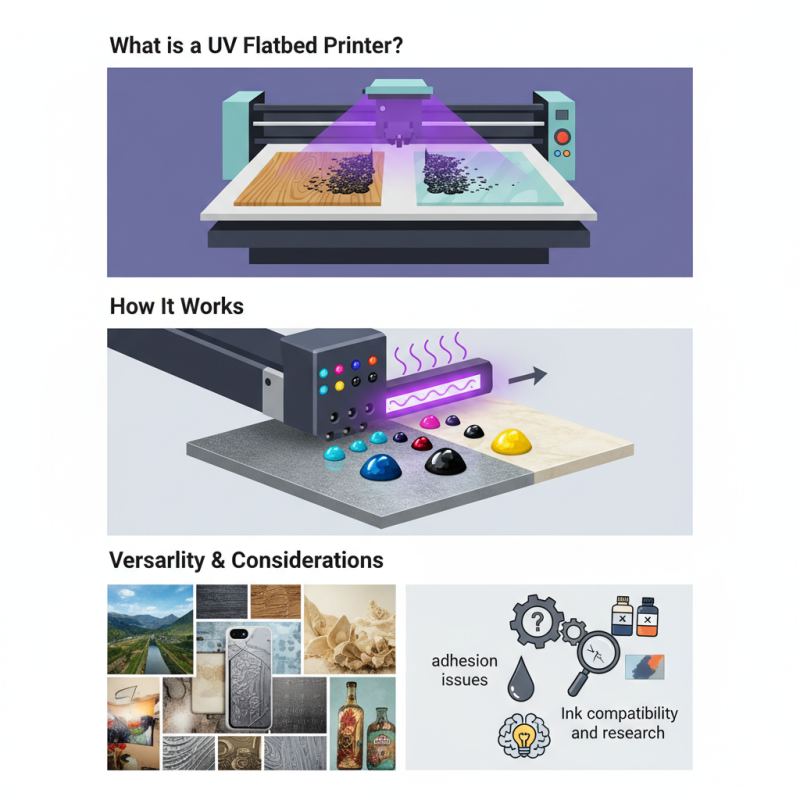
What is a UV Flatbed Printer?
A UV flatbed printer is a unique type of printing device that utilizes ultraviolet light to cure inks. This process solidifies the ink as it is printed onto various surfaces. It opens a world of possibilities in printing on materials like wood, glass, metal, and plastic. The versatility of this technology makes it appealing for both industrial applications and creative projects.
The printer works by emitting UV light as the print head moves across the printing surface. The UV light instantly cures the inks, allowing for vibrant colors and sharp details. This system minimizes drying time, making it efficient for high-volume production. However, achieving consistent quality can sometimes be challenging. Variations in surface texture or color can affect the final output.
One may encounter issues with ink adhesion on certain materials. Experimenting with different surfaces is crucial. The ink may not always adhere well, leading to inconsistencies. Additionally, not every UV printer is the same in terms of quality and features. While some models excel in detail, others may struggle. Understanding these nuances is key for anyone looking to invest in UV flatbed printing technology.
Key Components of a UV Flatbed Printer
A UV flatbed printer is a powerful tool used in various industries. Its main components include the print head, UV light, and a flat printing surface. The print head applies UV ink onto the material. It moves quickly and precisely, allowing for high-quality images.
The UV light plays a crucial role. It instantly cures the ink, turning it from liquid to solid. This process allows for vibrant colors and sharp details. The flat surface ensures that materials stay in place during printing. It can handle a variety of substrates, from wood to glass.
Tips: Always keep the print head clean. A dirty head can lead to poor print quality. Regular maintenance is essential for optimal performance. Consider testing materials before printing large batches. This helps avoid costly mistakes. Remember that some substrates may require specific settings for the best results.
What is a UV Flatbed Printer and How Does It Work? - Key Components of a UV Flatbed Printer
| Component | Description | Function |
| Print Head | Dispenses UV ink onto the substrate through small nozzles. | Creates the digital image by applying ink in precise amounts and patterns. |
| UV Light System | Cures the UV ink almost instantly as it is printed. | Ensures quick drying, allowing for high-speed printing. |
| Media Platform | Flat surface where materials are placed for printing. | Provides stability and support for various substrates during printing. |
| Ink Supply System | Contains and delivers UV inks to the print head. | Maintains a consistent flow of ink for optimal print quality. |
| Control Software | Manages the entire printing process and parameters. | Facilitates design input and adjusts settings for best results. |
| Vacuum System | Helps hold the media in place during printing. | Prevents movement of the substrate for accurate printing. |
How UV Flatbed Printers Operate
UV flatbed printers are innovative devices designed to print directly onto various materials. Their operation relies on UV (ultraviolet) light technology, which cures the ink almost instantaneously upon application. This process allows for vibrant colors and detailed designs, making UV printers favored in many industries.
The printer's flatbed design accommodates a diverse range of substrates, from wood and glass to metal and plastic. As reported by industry studies, the global market for UV printing reached approximately $7 billion in 2022. The ability to print on these substrates expands creative possibilities for businesses. However, achieving optimal results depends heavily on the setup and calibration of the printer, as misalignment can lead to wasted materials and time.
Moreover, the curing process requires careful management. Improper UV exposure can result in distorted images or weak bonds, complicating the overall workflow. While UV printers promise efficiency and versatility, they also necessitate training and skill to operate. Industry experts often point out that maintaining the machines in good condition is critical for ensuring longevity and high-quality output. Understanding these factors can enhance operational effectiveness, leading to better production outcomes.
Advantages of Using UV Flatbed Printers
UV flatbed printers have revolutionized printing technology by allowing direct printing onto a variety of surfaces. One major advantage is versatility. They can print on materials like wood, glass, acrylic, and fabric, making them ideal for creative projects. These printers use UV light to cure the ink, which ensures precise and vibrant results.
Another significant benefit is durability. UV printing creates a strong bond between the ink and substrate. This results in prints that resist fading and are weather-resistant. Such longevity is crucial for outdoor signage and promotional materials, where wear and tear can occur quickly.
Tip: Always test your materials before full production. Different substrates can react differently to UV ink, affecting quality.
Ease of use is another advantage. Many UV flatbed printers come equipped with user-friendly interfaces, allowing for quick adjustments. This can reduce the learning curve for operators. However, inconsistency in print quality can occur if settings are not adjusted properly for different materials.
Tip: Keep a log of settings used for various substrates. This can help troubleshoot future issues and maintain quality.
In summary, the advantages of UV flatbed printers make them a valuable tool for those in the printing industry. They enhance creativity, offer strong durability, and provide ease of use with proper adjustments. While they are an excellent choice, continuous monitoring is essential to ensure consistent output.
Applications of UV Flatbed Printing in Various Industries
UV flatbed printing has revolutionized various industries by offering innovative printing solutions. This technology enables printing directly onto diverse substrates, including wood, plastic, glass, and metal. The global UV printing market is projected to reach $4.83 billion by 2027, driven by its growing adoption across sectors such as packaging, signage, and industrial applications.
In the signage industry, UV flatbed printers produce vibrant graphics with high durability. Companies report that UV prints have a lifespan up to five times longer than traditional inks. This longevity makes them ideal for outdoor signage, where weather resistance is crucial. In packaging, UV printing allows for striking designs that are essential for brand differentiation. Research indicates that over 30% of packaging firms now utilize this technology for its efficiency and quality.
Tips: Consider the substrate when choosing a UV printer. Different materials may require specific settings for optimal results. Regular maintenance is crucial. Dust and ink residue can impact print quality over time. Be aware of the curing time needed for different inks; some may require longer exposure to UV light for complete curing.
While UV flatbed printing presents many advantages, it’s essential to be mindful of potential downsides. Initial investment costs can be high, and tech updates may be necessary for optimal operation. Additionally, a learning curve exists for operators new to this technology, which can lead to suboptimal results if not managed properly. Ensuring proper training can help mitigate these issues, enhancing overall productivity and output quality.