
Why Choose Solar PV Battery for Global Energy Needs?

Solar Pv Battery systems are becoming a practical response to a difficult energy reality. Solar power is abundant, but sunlight disappears every evening. A battery stores midday electricity for evening cooking, cooling, lighting, and electric vehicle charging. This simple shift can make renewable power more dependable.

The scale is already significant. IRENA’s Renewable Capacity Statistics 2024 reported approximately 346 gigawatts of new solar capacity worldwide in 2023. However, generation capacity alone cannot guarantee reliable electricity. The International Energy Agency’s Batteries and Secure Energy Transitions report states that global energy storage capacity must increase sixfold by 2030 under its net-zero pathway. That requirement highlights the growing role of Solar Pv Battery technology in homes, businesses, and utility projects.

Costs are also moving in a favorable direction. BloombergNEF reported that average lithium-ion battery pack prices fell to 115 dollars per kilowatt-hour in 2024. Yet price should not be the only measure. Battery chemistry, usable capacity, warranty terms, thermal management, recycling, and local grid rules affect real performance. A low-cost system may deliver disappointing results if installation quality is weak.

The choice is not automatic. Climate, load patterns, roof conditions, and backup expectations must be assessed carefully. A household in a sunny region may need less storage than a cloudy household with evening demand. The answer remains imperfect, but the direction is clear. Solar Pv Battery systems can connect clean generation with the hours people actually need electricity.
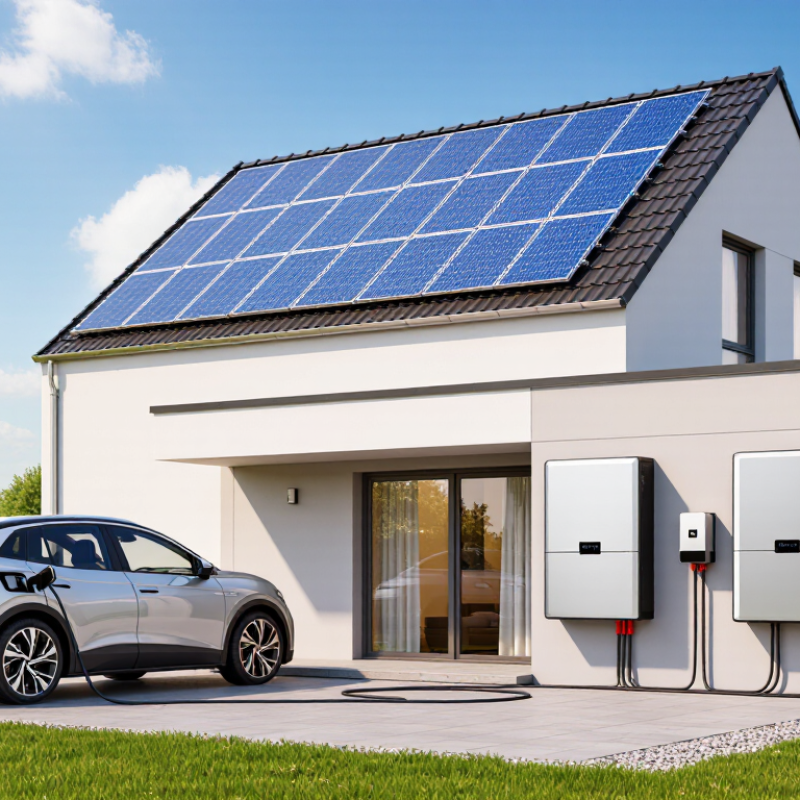
Why Choose Solar PV Battery for Global Energy Needs?

Solar PV Batteries Defined: 346 GW of Solar Added Globally in 2023

In 2023, the world added 346 GW of solar photovoltaic capacity. IRENA’s Renewable Capacity Statistics 2024 reports that solar represented nearly three quarters of all new renewable power capacity. This figure shows strong momentum, but panels alone cannot follow demand after sunset.

A solar PV battery stores excess electricity during bright hours. It releases that energy when clouds arrive, evening demand rises, or grid supply becomes tight. The IEA reported that global battery storage additions reached about 42 GW in 2023. That was a major increase from the previous year.

A typical system combines lithium-based cells, an inverter, thermal controls, and a battery management system. These parts regulate charging, discharge, safety, and usable capacity.

The benefits are practical. A household can store midday generation for cooking and lighting at night. A factory can reduce short evening peaks. Remote communities can use fewer diesel generators. Yet capacity figures need careful reading. Added solar capacity does not equal delivered electricity. Weather, curtailment, battery losses, and ageing affect real performance.

The IEA’s Batteries and Secure Energy Transitions report also indicates that global energy storage must expand substantially by 2030 to support rising renewable generation. Battery sizing remains imperfect. Oversizing wastes capital, while undersizing limits resilience. Local sunlight, load patterns, tariff rules, and recycling plans should guide each design.

How PV Battery Systems Work: 85–95% Round-Trip Efficiency in Li-Ion Storage

Why Choose Solar PV Battery for Global Energy Needs?

A solar PV battery stores midday electricity for evening demand, reducing wasted solar generation. Solar panels produce direct current, while homes usually require alternating current. An inverter manages this conversion and controls charging, discharging, and grid interaction.

Lithium-ion systems commonly achieve 85–95% round-trip efficiency under suitable conditions. This means 85–95 kilowatt-hours may return from every 100 kilowatt-hours stored.

NREL’s 2024 Annual Technology Baseline uses approximately 85% for utility-scale battery systems. Higher figures can appear under laboratory or carefully optimized conditions. They may not include every inverter, cable, cooling, or standby loss.

The number is not magic. Temperature, battery age, operating speed, and depth of discharge all matter. The International Energy Agency reported that battery storage additions reached about 42 GW globally in 2023, showing stronger demand for flexible electricity systems.

In practical project sizing, efficiency should be tested across a full operating year. A battery losing 10% during each cycle can materially affect savings. A cold installation may deliver less usable energy than its datasheet suggests. Actual performance needs monitoring.

Tips: Request system-level round-trip efficiency, not only cell efficiency. Check values at realistic temperatures and partial loads. Review degradation assumptions over ten years. Leave space for ventilation and safe maintenance access. A smaller battery with better daily utilization may outperform a larger battery that remains idle.

Why Storage Improves Solar Reliability: Shifting Energy to Daily Demand Peaks

Solar PV generates its strongest output around midday, when many homes and businesses use less electricity. A battery stores this surplus instead of sending it immediately to the grid. Later, stored power can support cooking, cooling, lighting, and charging during the evening peak.

This daily shift improves solar reliability without requiring constant sunshine. For example, a household may charge its battery from 11 a.m. to 3 p.m. Then, from 6 p.m. to 9 p.m., it can use stored energy when demand rises and electricity prices may increase. During short cloud cover, the battery can also smooth sudden changes in PV output. That feels practical.

Good performance depends on accurate sizing. Installers should examine hourly consumption, seasonal sunlight, battery efficiency, and backup priorities. A larger battery is not automatically better. Oversizing can leave capacity unused, while undersizing may provide only limited evening support. Batteries also lose capacity over time, especially in hot conditions. Regular monitoring helps reveal these changes, although real-world results may differ from design estimates. The system is useful, not perfect.

Why Choose Solar PV Battery for Global Energy Needs? - Why Storage Improves Solar Reliability: Shifting Energy to Daily Demand Peaks

Dimension Typical Value or Range How It Supports Daily Peak Shifting Practical Interpretation
Solar generation profile Highest output during daylight hours, commonly around late morning to mid-afternoon Solar energy can be stored before evening demand increases. The battery reduces the mismatch between solar production and customer demand.
Common battery duration Approximately 1–4 hours for many daily solar-shifting applications Stored electricity can be discharged through the evening peak. Longer-duration systems can cover a wider demand window but generally require more capacity.
Round-trip efficiency Typically about 85–95% for modern battery storage systems Most of the energy stored during the day remains available for evening use. For every 100 kWh charged, approximately 85–95 kWh may be delivered after charging and discharging losses.
Response speed Milliseconds to seconds, depending on the control system The battery can respond quickly to sudden changes in load or solar output. Fast response helps stabilize frequency and smooth short-term solar fluctuations.
Typical operating pattern Charge during high-solar periods; discharge during evening demand peaks Energy is moved from a lower-demand period to a higher-demand period. This operating pattern is commonly called time-shifting or load-shifting.
Illustrative daily energy shift 100 kWh charged at 90% round-trip efficiency delivers about 90 kWh The delivered energy can serve evening lighting, cooling, appliances, or commercial loads. Actual output varies with battery temperature, power rating, state of charge, and system losses.
Peak-demand reduction Potentially equal to the battery discharge power during the scheduled peak period Battery discharge lowers the amount of electricity drawn from the grid at peak times. A 1 MW battery discharging for 2 hours can provide up to 2 MWh before accounting for operating limits.
Solar curtailment reduction Site- and grid-dependent; highest when midday solar production exceeds local demand or export capacity Excess solar can be stored instead of being reduced or curtailed. The benefit is greatest in areas with strong midday solar output and constrained networks.
Capacity factor improvement A battery does not increase solar resource availability, but it can increase the useful delivery window Solar electricity becomes available beyond the hours when the panels are producing. This improves the alignment between renewable generation and electricity consumption.
Grid reliability support Short-term balancing, reserve, and ramping support Storage can react when clouds reduce PV output or demand changes unexpectedly. Battery storage complements, rather than completely replaces, transmission, generation, and demand management.
Cycle life consideration Varies widely by chemistry, operating temperature, depth of discharge, and management strategy Daily cycling should be scheduled within the battery’s operating limits. Lower depth of discharge and suitable temperature control can help reduce degradation.
Best-fit demand periods Evening residential demand, commercial closing hours, and system-level evening peaks Stored solar is released when direct PV output is low and demand is higher. The most suitable schedule depends on local load curves, tariffs, weather, and grid conditions.
Data basis: Values are representative engineering ranges and an illustrative calculation based on publicly reported characteristics of solar PV and battery energy-storage systems. Actual performance depends on system design, site conditions, operating strategy, battery chemistry, and grid requirements.

PV Battery Economics: Battery Pack Prices Fell 89% from 2010 to 2023

Why Choose Solar PV Battery for Global Energy Needs?

PV Battery Economics: Battery Pack Prices Fell 89% from 2010 to 2023

Battery economics have changed sharply. Industry price tracking shows that battery pack prices fell 89% between 2010 and 2023. This decline makes solar PV storage more accessible for homes, farms, and small businesses. A battery can store midday electricity for evening lighting, refrigeration, or essential equipment.

The financial benefit depends on local conditions. A household with strong afternoon sunlight may reduce expensive evening grid purchases. In regions with unstable supply, stored power can also protect medical devices and communication equipment. However, pack prices are only one part of the investment. Installation, inverters, permits, maintenance, financing, and replacement costs still matter.

The numbers need careful reading. A cheaper battery does not automatically create faster payback. Temperature, cycling frequency, battery chemistry, and electricity tariffs can change the result. A system used daily may provide more value than one used only during rare outages. Real projects also reveal imperfect details, such as limited roof space or unexpected installation delays.

Performance declines over time. Planning should include usable capacity, not only the advertised size. Safety standards and professional installation remain essential. Recycling systems are improving, but they are not equally available everywhere. That gap deserves more attention. Careful modeling, local price data, and transparent warranties help turn falling battery costs into a practical energy decision.

Global Deployment Factors: Grid Flexibility, Resilience, and Cost Reduction

Why Choose Solar PV Battery for Global Energy Needs?

Solar PV batteries can make electricity systems more flexible, resilient, and affordable. Solar production peaks at midday, while households and factories often consume power after sunset. A battery stores surplus generation, then releases it during evening demand or short grid interruptions. The International Energy Agency reports that global energy storage capacity must rise sixfold to 1,500 GW by 2030. Batteries are expected to provide most of that growth.

Grid flexibility is only part of the case. During storms, heatwaves, or fuel disruptions, distributed solar storage can support hospitals, farms, and remote communities. It can also reduce expensive peak-power purchases. The International Renewable Energy Agency reported that battery storage costs fell about 89% between 2010 and 2023. Still, lower prices do not guarantee lower bills. Installation, replacement, financing, and local tariffs can change the result. Battery degradation also remains an uncomfortable calculation.

Tips: Size the battery around evening demand, not only panel capacity. Check usable energy, cycle life, temperature limits, and emergency-load priorities. Model at least three years of electricity tariffs. A larger system may look safer, but unused capacity weakens returns. Recycling systems and supply-chain transparency deserve equal attention. Forecasts are useful, not perfect.