
How to Choose the Best CNC Parts Supplier?

Choosing the right Cnc Parts supplier is a production decision, not merely a purchasing task. A supplier may offer a low quote, yet struggle with tight tolerances, stable materials, or repeatable delivery. One rejected aluminum housing can delay assembly, increase inspection costs, and damage customer confidence. Price is only one signal.

Industry data supports a more disciplined approach. Rockwell Automation’s 2024 State of Smart Manufacturing Report found that 95% of manufacturers have invested in, or plan to invest in, artificial intelligence and machine learning. This shift makes supplier data, process monitoring, and digital traceability increasingly important. Grand View Research also projects strong growth in the global CNC machine market through 2030, reflecting rising demand for accurate, scalable production. These reports do not guarantee supplier quality. They show why verification matters.

W. Edwards Deming, a leading manufacturing-quality expert, said, “Quality comes not from inspection, but from the improvement of the production process.” That principle applies directly to Cnc Parts sourcing. Ask whether the supplier controls the process before defects appear. Review inspection plans, material certificates, machine capabilities, and sample reports. Request evidence from similar projects, not polished promises. A capable supplier should explain how it controls a 0.02 mm bore, protects a cosmetic surface, and manages revision changes. No checklist is perfect. Even experienced buyers can overvalue impressive equipment or a fast response. The strongest choice combines technical knowledge, transparent communication, reliable capacity, and documented results. An honest supplier should also identify risks before production begins.
How to Choose the Best CNC Parts Supplier?

Defining Your CNC Parts Requirements and Quality Standards

Choosing the best CNC parts supplier starts with defining the part, not comparing prices. Describe the material, dimensions, tolerances, surface finish, quantity, and delivery schedule. A drawing alone may not explain every functional need. State where ±0.02 mm matters and where a wider tolerance is acceptable. This prevents unnecessary machining costs.

Quality standards should match the part’s real use. Request material certificates, inspection reports, and clear measurement methods. For critical dimensions, ask whether the supplier uses calibrated equipment and records results by batch. A practical supplier should also explain its process, from programming and fixturing to deburring and final inspection. Ask for sample parts when the design is new. Small errors become visible quickly.

Keep the requirements measurable.

Experience matters, but it needs evidence. Review similar machining work, production capacity, communication habits, and corrective-action records. A supplier that admits a previous mistake may be more reliable than one promising flawless production. I have found that unclear drawings often cause more trouble than weak machining skills. That point is easy to overlook. Leave room for technical discussion, but document every agreed change. A capable supplier should question unrealistic tolerances, suggest manufacturable alternatives, and protect the intended function without silently changing the design.

How to Choose the Best CNC Parts Supplier?

Defining CNC parts requirements and quality standards starts with ranking the factors that most directly affect fit, function, consistency, and total production risk.

The priority scores are based on common CNC procurement considerations, using a 1–10 scale. Dimensional accuracy, material traceability, inspection capability, and repeatability should receive the highest attention when comparing suppliers. Lead time and cost remain important, but they should be evaluated alongside quality evidence and production capability.

Evaluating Supplier Capabilities, Equipment, and Expertise

Choosing a CNC parts supplier requires more than comparing hourly rates. Review its experience with your materials, tolerances, surface finishes, and production volume. A supplier skilled in aluminum may not deliver the same accuracy with hardened steel or engineering plastics.

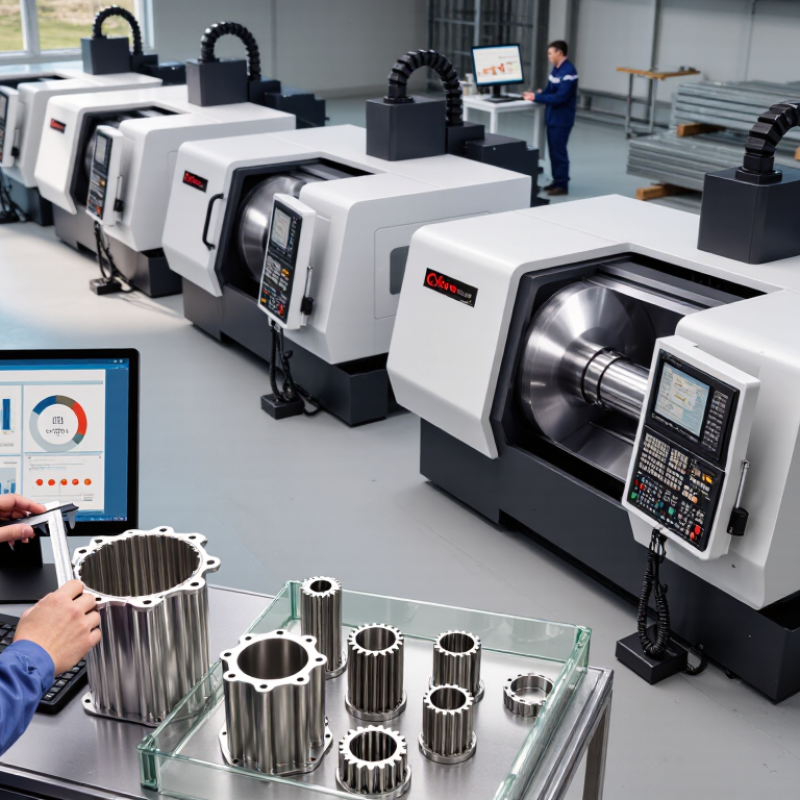
Ask for clear evidence of capability. Inspect the machine list, including milling centers, turning equipment, multi-axis systems, and inspection tools. Modern equipment helps, but operator judgment matters just as much. Probe systems, calibrated gauges, and coordinate measuring machines can verify critical dimensions before shipment.

Request sample inspection reports and a realistic production schedule. Reliable suppliers explain how they manage tool wear, batch variation, and late design changes. Their quality process should include incoming material checks, in-process measurements, and final inspection records. I have learned that detailed questions often reveal more than polished presentations. A clean workshop helps.

Technical expertise should be visible in the quotation. Look for practical comments about wall thickness, sharp internal corners, datum selection, and fixture access. These suggestions can reduce machining time and prevent avoidable defects. However, expertise is not always perfect. A supplier may recommend an efficient process that conflicts with your assembly needs. Discuss the trade-offs openly.

When possible, visit the facility or arrange a live production review. Observe material labeling, chip management, inspection habits, and how workers handle rejected parts. Confirm communication responsibilities and revision control before approving the order. A capable supplier should welcome these checks, even when the questions become uncomfortable.

Comparing Materials, Tolerances, Pricing, and Production Capacity

Choosing a CNC parts supplier starts with material control, not a low headline price. Aluminum suits lightweight housings, while stainless steel handles corrosion and repeated cleaning. Ask for mill certificates, heat numbers, and material traceability. The 2024 State of Smart Manufacturing report surveyed 1,560 manufacturers and identified quality consistency as a major operational priority. That finding matches shop-floor experience: a perfect drawing cannot rescue unstable raw stock.

Tolerance claims need physical evidence. Request inspection reports showing CMM results, surface roughness, and critical dimensions. ISO 2768 may cover general tolerances, but functional features often need tighter, separately defined limits. A ±0.01 mm requirement can increase machining time, inspection effort, and scrap risk. Very tight tolerances are not automatically better. Sometimes, they are simply expensive. I would compare capability data across several batches, not one attractive sample.

Pricing should include tooling, programming, finishing, inspection, packaging, and freight. The 2024 Manufacturing Industry Outlook reported continuing pressure from labor shortages and production costs. Capacity deserves equal attention. Ask for available machine hours, backup equipment, shift patterns, and realistic monthly output. A supplier promising 10,000 parts may lack enough inspection capacity. One delayed batch can cost more than a higher unit price. My own purchasing mistake would be trusting quoted capacity without checking recent delivery records. That detail still deserves scrutiny.

How to Choose the Best CNC Parts Supplier? - Comparing Materials, Tolerances, Pricing, and Production Capacity

Benchmark comparison of common CNC supplier categories for prototype, low-volume, and production requirements

Supplier Category Common Materials Typical Process Capability Typical Tolerance Prototype Price Index Production Price Index Typical Capacity Typical Lead Time Best Fit
Local Job Shop Aluminum, carbon steel, stainless steel, brass, engineering plastics 3-axis and 4-axis milling; CNC turning; limited 5-axis work ±0.025 mm to ±0.05 mm for standard features High Medium 1–20 CNC machines; low to medium batch volume 5–20 business days Quick communication, repairs, fixtures, and low-volume custom parts
Specialized Precision Shop Tool steel, stainless steel, titanium, nickel alloys, aluminum 4-axis and 5-axis milling; Swiss turning; EDM; inspection documentation ±0.005 mm to ±0.025 mm on selected features Very high High 5–30 CNC machines; low to medium production volume 10–35 business days Aerospace, medical, instrumentation, and tight-tolerance components
Digital Manufacturing Network Aluminum, stainless steel, mild steel, brass, copper, plastics, titanium Access to milling, turning, sheet metal, and finishing through multiple production sites Typically ±0.05 mm; tighter tolerances available by review Medium to high Medium to low Scalable from 1 part to thousands of parts 3–15 business days for standard parts Fast quoting, distributed capacity, and mixed-process projects
Contract Production Manufacturer Aluminum, steel, stainless steel, brass, copper, plastics, titanium Multi-axis machining, automated inspection, assembly, and secondary operations ±0.01 mm to ±0.05 mm, depending on feature and material Medium Low 20–100+ machines; medium to high production volume 3–12 weeks for production programs Repeat orders, blanket purchase agreements, and stable production schedules
High-Volume Automated Facility Aluminum, steel, stainless steel, brass, copper, and selected plastics High-speed machining, pallet systems, robotics, in-process measurement ±0.01 mm to ±0.05 mm for qualified production features Not usually economical for one-off parts Very low at high volumes 100+ machines; high and continuous production volume 6–16 weeks, including process validation Automotive, industrial equipment, and other repeat high-volume programs
Benchmark notes: Price indices are relative comparisons rather than fixed quotations. Actual pricing depends on material grade, part size, geometry, tolerances, surface finish, quantity, inspection requirements, tooling, shipping, and order location. Standard CNC milling and turning commonly achieve approximately ±0.025 mm to ±0.05 mm; tighter tolerances require controlled processes, suitable equipment, and documented inspection.

Verifying Certifications, Quality Control, and Supplier Reliability

How to Choose the Best CNC Parts Supplier?

Certifications provide a useful starting point, but they need careful verification. Request the certificate number, issuing body, covered processes, and expiration date. Check whether the certification scope includes CNC machining, inspection, and material handling. A certificate outside its valid scope means little. Also ask for recent audit findings and corrective action records. Reliable suppliers usually share these details without hesitation.

Quality control should be visible on the shop floor. Ask how operators check dimensions during production, not only after machining. Confirm that measuring tools receive regular calibration. Request sample inspection reports, material certificates, surface finish records, and full part traceability. A coordinate measuring machine can confirm tight tolerances, but it cannot fix poor process planning. Clear drawings and agreed acceptance criteria matter just as much.

Supplier reliability appears through daily behavior. During a trial order, monitor response speed, packaging, delivery accuracy, and handling of nonconforming parts. Ask how engineering changes are reviewed and recorded. Visit the facility if possible; observe machine maintenance, inspection areas, and material labeling. A polished presentation can hide weak systems. I once underestimated communication delays, and the schedule suffered. That mistake changed my evaluation process. Start with evidence, not promises.

Selecting the Supplier That Best Fits Your Project Needs

Selecting a CNC parts supplier should begin with your project’s actual demands, not a polished website. A supplier may excel at aluminum housings but struggle with hardened steel shafts or tight internal bores. Define the material, quantity, tolerances, surface finish, and delivery date before requesting quotations. Clear drawings reduce costly assumptions.

Ask how the supplier verifies dimensions during production. Reliable answers should mention calibrated equipment, inspection records, material certificates, and controlled drawing revisions. Request a sample inspection report for a similar part. Ask for evidence. Also check whether the supplier can manage prototypes, small batches, and repeat orders without changing quality. Details matter.

Communication often reveals the best fit. Notice how quickly the supplier identifies unclear tolerances or unrealistic lead times. A useful partner will suggest practical changes, such as adjusting a corner radius or improving tool access. However, do not accept every recommendation automatically. The cheapest quotation can hide extra finishing, packaging, or inspection costs. I have learned that promised speed is less valuable when revisions create confusion. Compare the full process, including engineering support, quality controls, capacity, and shipping protection. One missed thread or poorly protected surface can delay assembly for days. A short trial order may expose weaknesses before they affect your main production run.