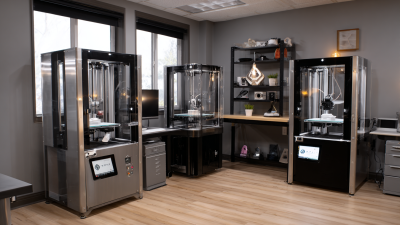
Why Choose a High End 3D Printer for Your Business Needs?
In today's competitive market, many businesses seek reliable options to meet their manufacturing needs. A "high end 3D printer" emerges as a powerful solution. Industry expert Dr. Sarah Thompson, a leader in additive manufacturing, states, “Investing in a high end 3D printer can transform your production capabilities.” This assertion highlights the importance of quality in technological choices.
High end 3D printers offer remarkable precision and speed. They create intricate designs that can significantly enhance product quality. However, not all businesses may fully utilize these advanced features. Companies need to assess their specific requirements and capabilities. Dr. Thompson emphasizes the necessity of understanding one's needs before making an expensive purchase.
Moreover, the investment in high end equipment might seem daunting. While benefits are clear, potential buyers should reflect on their current processes. Some might find it challenging to integrate new technology into their workflow. As Dr. Thompson notes, “Adaptation is where many fail, despite the technology being exceptional.” A thoughtful approach can help businesses reap the full rewards of high end 3D printing.
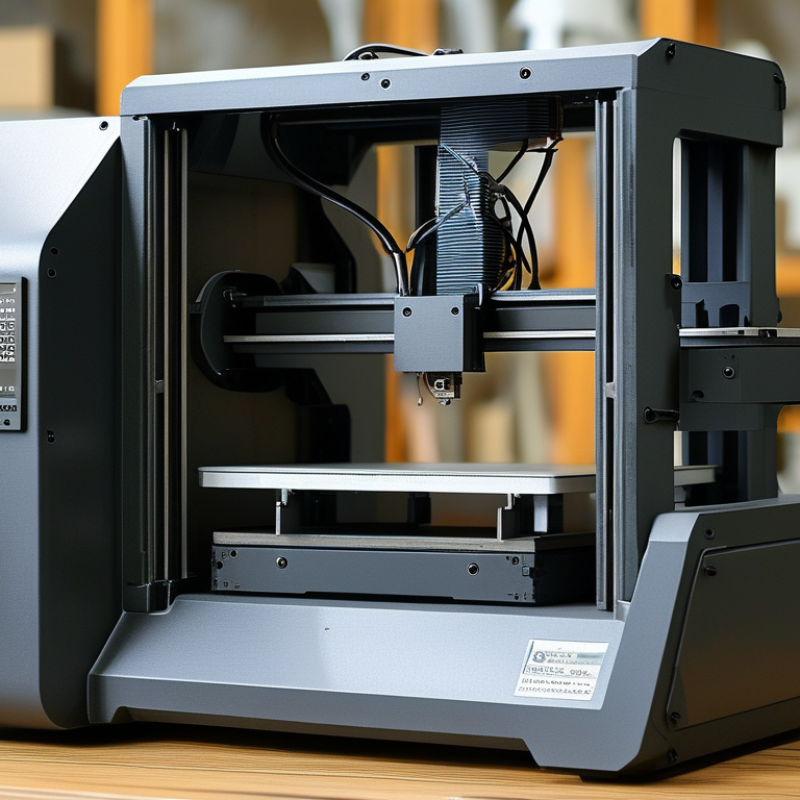
Benefits of Using a High End 3D Printer in Business Applications
High-end 3D printers are increasingly becoming pivotal in business applications. Their precision and capability often surpass those of standard models, allowing for intricate designs and higher-quality prototypes. According to a report by Wohlers Associates, the global 3D printing market is expected to reach $34.8 billion by 2024. This growth highlights the rising demand for advanced printing technologies across various sectors.
Businesses benefit significantly from the use of high-end printers. They can manufacture complex geometries and reduce lead times for product development. For instance, in the automotive industry, prototypes can be created in days rather than weeks. A study found that companies utilizing high-end 3D printers have reduced production costs by up to 25%. However, the initial investment can be daunting. Not every small business may be ready for such expenditures without clear return on investment models.
Additionally, high-end printers allow for material experimentation, which can lead to groundbreaking innovations. For example, the use of biocompatible materials in medical applications has opened new avenues in patient-specific treatments. Companies must acknowledge the challenges in transitioning to these technologies. Employee training and maintenance costs can add complexity to the adoption process. Balancing the benefits with these factors requires careful consideration and planning.
Key Features to Look for in a High End 3D Printer
When choosing a high-end 3D printer, several key features stand out. One important aspect is print resolution. A printer with a high resolution produces finer details, which is crucial for industries like jewelry and engineering. Precision matters in these fields, and a lower resolution might not do justice to intricate designs. Additionally, look into the build volume. A larger build volume allows for the creation of bigger prototypes, enhancing versatility.
Another crucial feature to assess is the material compatibility. High-end printers support a wide range of materials, from standard plastics to advanced composites. This flexibility impacts the end product's strength and application. Not every printer excels here. Some may struggle with specific materials, leading to frustrating results.
User interface and software compatibility are also vital. An intuitive interface streamlines the design process, reducing the learning curve. However, not all printers offer a seamless user experience. Many users report challenges with software integration, which can hinder productivity. Considering these elements can guide you toward a printer that meets both current and future business needs.
Cost-Benefit Analysis: High End vs. Entry-Level 3D Printers
Choosing between high-end and entry-level 3D printers requires careful consideration. Entry-level models can be affordable, but often lack precision and speed. These machines may suit hobbyists or simple prototypes, but they typically fall short for commercial applications. Issues like lower build quality and limited material compatibility can lead to increased costs over time.
High-end 3D printers come with advanced technologies. They often provide superior resolution and faster production times. This can significantly enhance productivity and reduce the need for post-processing. Businesses can benefit from the ability to use a wider range of materials. This flexibility allows for more innovative product designs. The initial investment might be higher, but the long-term returns can justify it.
When considering a 3D printer, understand your specific needs. Are you aiming for intricate designs or rapid prototyping? This will influence your decision. Always assess not just the price, but the potential hidden costs. Maintenance, support, and material requirements can impact your budget. Think about scalability too. Will your business grow, requiring more advanced capabilities in the future? These elements will guide your choice for a printer that aligns with your business goals.
Industry-Specific Use Cases for High End 3D Printing
High-end 3D printers serve diverse industries, offering unique advantages tailored to specific needs. In the aerospace sector, these printers produce complex components that are both lightweight and durable. They enable rapid prototyping, allowing engineers to test designs more efficiently. This capability reduces material waste and accelerates the development process. However, engineers must be cautious about the balance between complexity and functionality.
The healthcare industry also benefits significantly from high-end 3D printing. Custom prosthetics and implants can be made to fit individual patients perfectly. This not only improves patient outcomes but also enhances the quality of care. Yet, the reliance on advanced technology necessitates regular training for medical staff. Missteps in this area can lead to costly errors.
In the automotive sector, high-end 3D printing is revolutionizing prototyping. Car manufacturers can create intricate parts quickly, enabling design flexibility. This innovation helps reduce lead times and costs. Yet, companies must maintain rigorous quality control. Even small defects can lead to significant safety concerns. Investing in high-end 3D printing requires careful consideration of both benefits and potential drawbacks.
Why Choose a High End 3D Printer for Your Business Needs? - Industry-Specific Use Cases for High End 3D Printing
| Industry |
Benefits of High End 3D Printing |
Use Case |
Materials Used |
| Healthcare |
Rapid prototyping of medical devices and custom implants |
Creating patient-specific surgical guides |
Biocompatible polymers |
| Automotive |
High precision parts and lightweight components |
Prototyping engine components |
Thermoplastics and composite materials |
| Aerospace |
Reduction of weight and improved fuel efficiency |
Manufacturing complex engine parts |
Metal alloys and high-heat resistant materials |
| Architecture |
Fast and effective visualization of design concepts |
Creating scale models of buildings |
PLA and resin materials |
| Consumer Products |
Customization and rapid product development |
Designing unique smartphone cases |
Various thermoplastics |
Future Trends in High End 3D Printing Technology for Businesses
High-end 3D printing technology is rapidly evolving. Businesses must stay informed to leverage these advancements effectively. Companies are increasingly using 3D printing for prototyping. Faster production times and lower costs are significant benefits. However, some organizations struggle to adopt new techniques. Resistance to change can hinder progress.
As 3D printers become more sophisticated, new materials are paving the way for innovation. With better materials, businesses can produce more durable and lightweight products. This opens doors to diverse industries like aerospace and healthcare. Yet, the learning curve can be steep. Understanding these materials takes time and expertise.
Future trends indicate more automation in 3D printing processes. Automated systems reduce human error and increase precision. Additionally, cloud-based solutions allow for easier access to design files and collaborative models. Despite these advantages, companies must approach these technologies with caution. Implementation should align with specific business needs. Adopting advanced tools without clear objectives may not yield the desired results.
Future Trends in High End 3D Printing Technology for Businesses